A Closet Organizer Plan for the Clothes You Own
Shopping note: This guide links directly to retailers. We do not earn a commission from these links. Read our disclosure. This is a research-based buying guide.
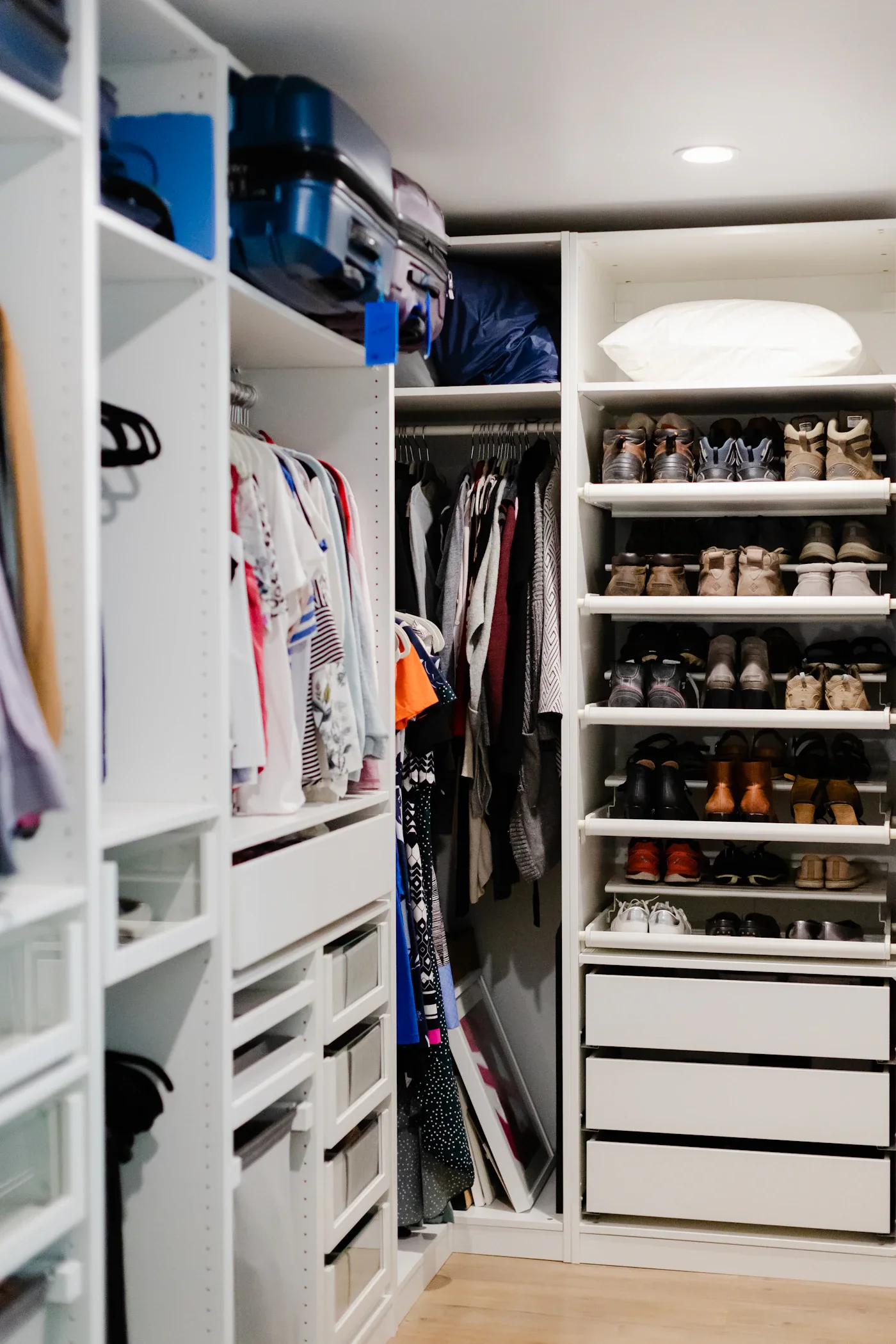
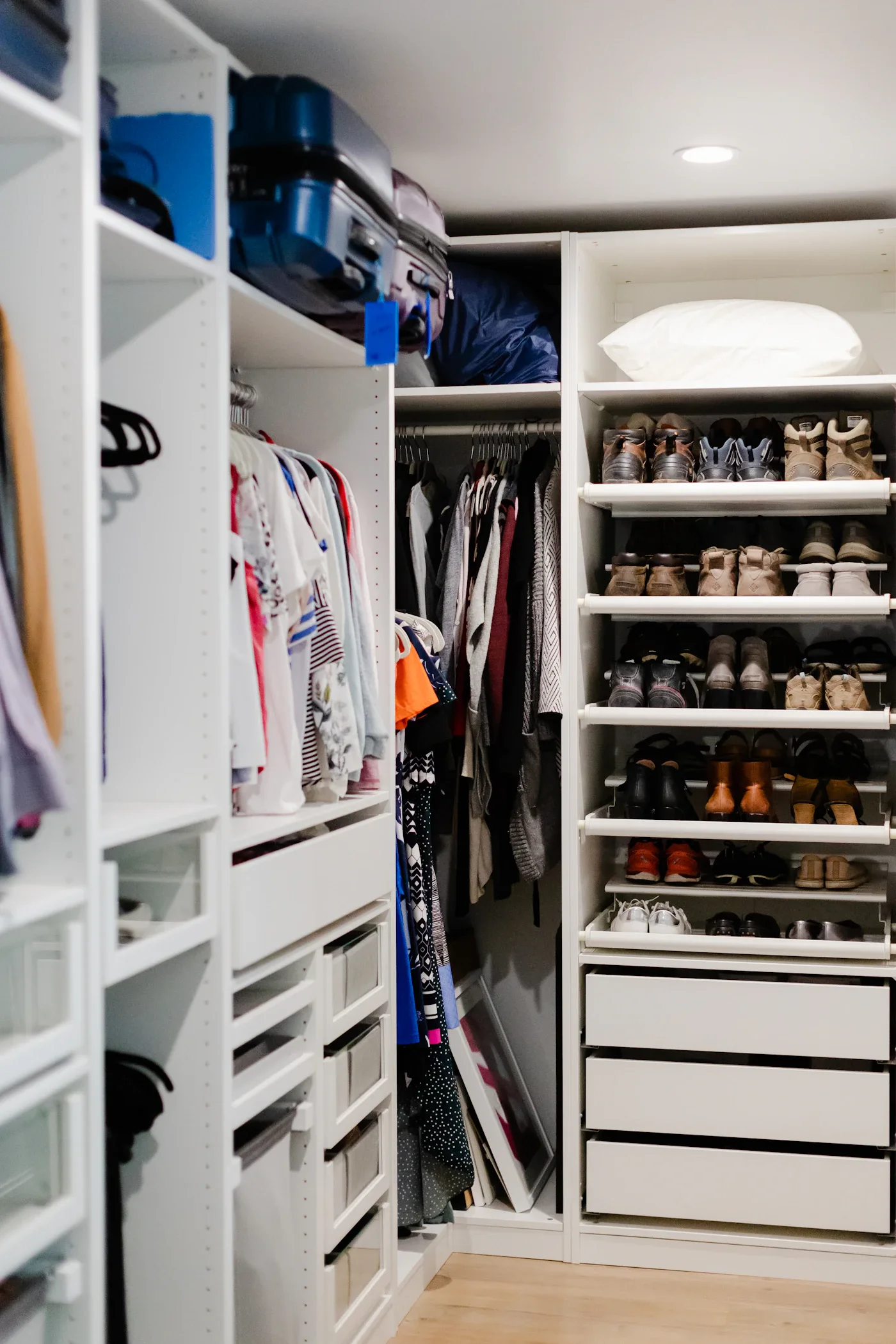
A closet organizer can be beautifully symmetrical and still leave you folding long dresses over a short rail. Before buying drawers, shelves, or a hanging system, look at the clothes that need to live there. The right arrangement should reflect your wardrobe's shapes and your everyday habits.
Our buying verdict: keep or improve the existing structure where it works, then add storage for the category causing the real problem. Short hanging clothes, long garments, folded knits, and small accessories need different spaces. A preset organizer package is useful only when those proportions match your wardrobe.
Inventory by storage shape
Group hanging items by their drop from the hanger: shirts and jackets in one group, longer garments in another. Separate clothes you prefer to fold. Set aside shoes, bags, and accessories so they do not disappear into a vague “miscellaneous” category.
Measure representative items in the way you actually store them. A folded sweater stack needs usable shelf depth, while a wide coat needs room at its shoulders. Do not install shelves so tightly that putting away laundry becomes a careful packing exercise.
Compare the useful additions
| Addition | Solves | Tradeoff |
|---|---|---|
| Second hanging rail | Unused height below short garments | Removes space needed by long clothing |
| Adjustable shelves | Changing folded-clothing categories | Requires a compatible, properly supported system |
| Hanging fabric shelves | A flexible place for lightweight folded items | Consumes rail width and has a limited load capacity |
| Drawer inserts | Small items that become mixed together | Too many compartments can reduce useful capacity |
| Removable labeled bins | Occasional accessories or seasonal categories | Contents need to be lifted out to browse |
Measure the opening as well as the interior
Sliding and bifold doors can hide parts of a closet even when open. A drawer positioned behind a door panel may not pull out, and a basket that fits on a shelf may not pass through the opening comfortably.
Record baseboards, trim, switches, access panels, and the full movement of the doors. For a wall-mounted system, use the manufacturer's installation requirements and suitable wall fixings. A decorative planning picture does not establish that your wall can support the same arrangement.
Check the load rating for rails, shelves, and hanging organizers. Do not assume different components in a series have identical capacities. If you are renting, confirm what changes are permitted before committing to a drilled system.
Give frequently used clothes the easy positions
Store the current rotation where you can see and reach it without a step or deep excavation. Less-used items can occupy the higher or farther locations, provided they can be retrieved safely. Keep heavy objects in a manageable position rather than making a high shelf carry every awkward box.
Open shelves work well when you can maintain short, visible stacks. If piles fall every time you remove one item, a divider or a smaller category may help more than another shelf. Drawers hide mixed textures, but they still need enough space to open fully.
For seasonal clothing, consider moving appropriate clean, dry items into under-bed storage instead of rebuilding the whole closet. This can free useful rail space without changing the installation.
Choose containers after the layout
Buy organizers to fit both the shelves and the contents. Measure internal usable dimensions if the container has tapered walls, thick handles, or a large rim. Clear boxes can help identify occasional items; fabric or opaque boxes may suit open shelves where visual calm matters.
Avoid purchasing a complete set of matching hangers until you know which shapes support your clothing. Heavy coats, delicate straps, and trousers may require different designs. A uniform appearance is secondary to the garment's storage needs.
Spend on flexibility, not every accessory
Adjustable positions and accessible replacement parts can be more valuable than a built-in rack for a category you barely own. Leave some room for ordinary changes in the wardrobe rather than designing to the last inch on day one.
Skip elaborate jewelry inserts or specialty pullouts unless they solve a daily frustration. A small removable tray can be easier to maintain and move. Review the layout after using it before adding another round of accessories.
Common questions
Are double rails always more efficient?
Only where most garments are short enough. Keep appropriate full-height space for long clothes you own rather than folding them awkwardly to fit the plan.
Do I need drawers in a reach-in closet?
Not necessarily. Existing bedroom drawers may already handle small items, leaving the closet better suited to hanging and shelves.
Should I buy bins before organizing?
Wait until you know the categories and usable dimensions. Containers selected first often determine a layout that does not fit the clothes.
Source and shopping reference
IKEA clothes organizers, including hanging storage and clothing boxes, checked October 9, 2026. The planning recommendations are editorial guidance based on ordinary storage tasks.
Check the details before you buy.
Compare current dimensions, materials, care instructions, and return terms at the retailer.