A Better Laundry Setup, Even Without a Laundry Room
Shopping note: This guide links directly to retailers. We do not earn a commission from these links. Read our disclosure. This is a research-based buying guide.
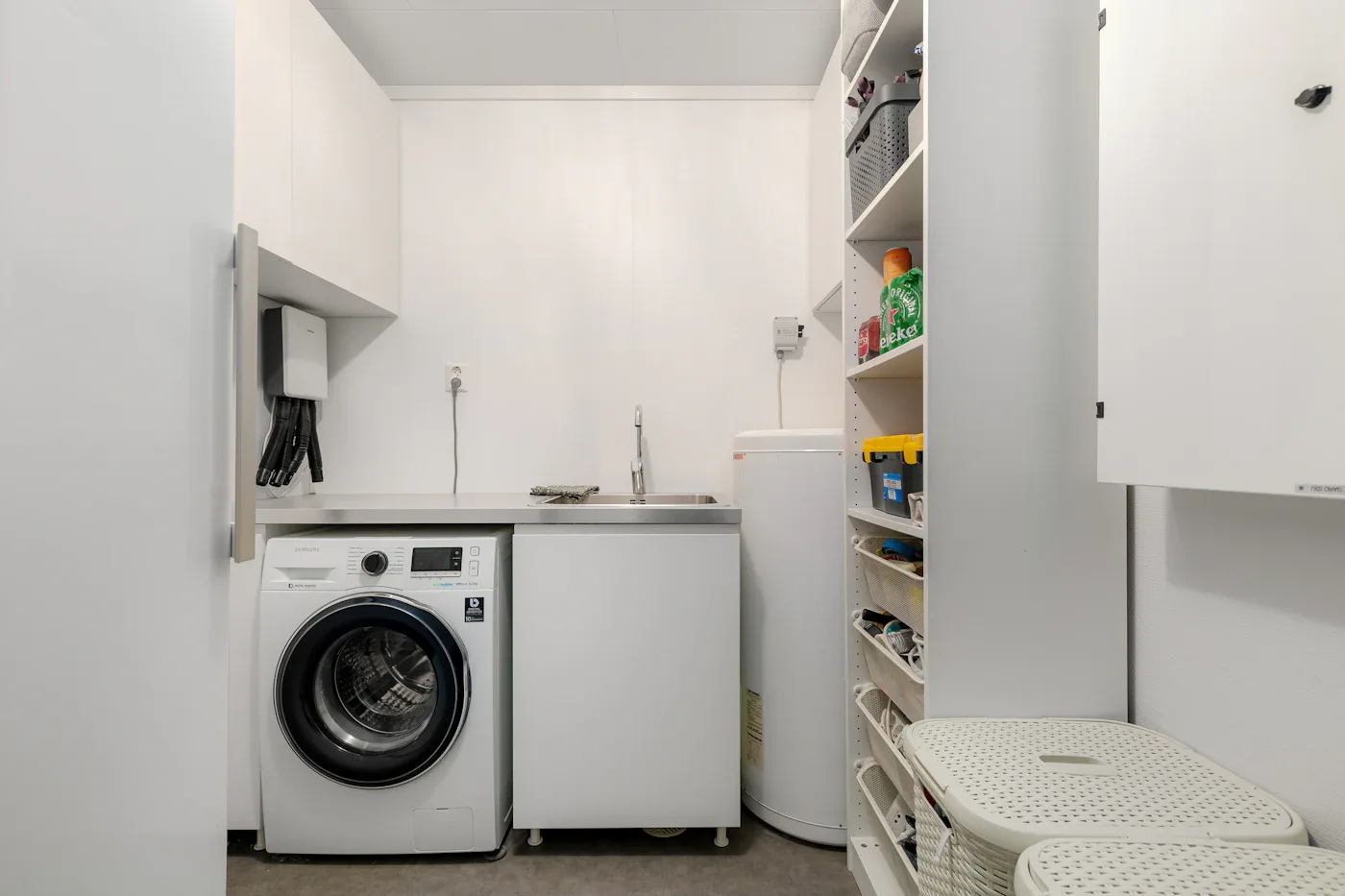
When laundry happens in a hallway closet or at a shared machine downstairs, a picture-perfect laundry room is not a useful shopping target. The real challenge is moving clothes through the steps without leaving baskets in the way: collect, sort, wash, dry, fold, and put away.
Our buying verdict: improve the step that repeatedly stalls. A carrying basket, compact drying rack, or clear folding surface can be more useful than new cabinets. Buy permanent storage only after checking machine access, ventilation, and product safety requirements.
Find the bottleneck
If dirty clothing spreads across the floor, you need a convenient collection point. If clean clothes sit in the dryer, the problem may be nowhere to fold them. If delicate items hang from every door, a drying rack with a planned location deserves priority.
Walk the actual route with a filled basket before buying a larger one. A basket that fits in the laundry corner may still be awkward on stairs or too wide to carry through a narrow doorway. Handles and balance matter as much as capacity.
Match the purchase to the task
| Item | Useful when | Check first |
|---|---|---|
| Removable laundry bag | Clothes travel to a shared laundry area | Carrying comfort, closure, and washable-liner instructions |
| Divided hamper | Several categories are washed separately | Whether each section fills at a useful rate |
| Folding drying rack | Air-dried garments have no designated space | Open footprint, load limits, and folded storage size |
| Wall-mounted drying rack | Floor space is limited | Installation, reach, and clearance when extended |
| Small folding surface | Clean clothing stalls before being put away | Stable support and machine access |
| Closed supply cabinet | Products need appropriate protected storage | Secure placement and label requirements |
Keep detergents in their original packaging
Decanting may make a shelf look coordinated, but laundry products need their labels and intended closures. CPSC specifically advises keeping liquid laundry packets sealed in their original packaging, locked up, and out of children's sight and reach. Do not place them in a clear decorative jar that resembles food storage.
Follow the product's use and storage directions, and keep measuring tools with the appropriate product. Secure storage is a more important purchase than matching dispensers. A high open shelf alone is not the same as a locked location.
Place supplies where they can be reached without leaning over a moving appliance or stacking unstable objects. Keep access to water shutoffs and service areas clear.
Choose a drying rack for the actual garments
A rack's capacity is not simply the number of bars. Think about the width of a shirt, the length of trousers, and the space a sweater needs when its care label calls for flat drying. A compact rack can work well for a small load while being impractical for several large towels.
Measure the open position. A rack that unfolds across the doorway is inconvenient even if it stores neatly afterward. Position it where it will not block passage, and manage humidity and ventilation appropriately for the room. Follow garment labels rather than assuming everything can hang from a narrow bar.
Make folding temporary if it needs to be
You do not need a permanent countertop for a task that happens a few times a week. A cleared table can do the job if it is clean and available when laundry finishes. Keep the basket nearby and return folded items promptly so the table remains useful for its main purpose.
If installing a surface over appliances, follow appliance clearance and installation requirements, and preserve access for service. Do not rest an improvised shelf on machines merely because the arrangement looks stable in a photograph.
Avoid overbuying the room
An elaborate sorting station is wasted if your household washes everything according to just a few practical categories. Conversely, one huge hamper can make separating delicate or special-care items harder. Choose for the washing decisions you actually make.
Spend on comfortable carrying, an appropriate drying setup, and safe product storage. Decorative signs, matching scoops, and a second basket for every possible category can wait. IKEA's laundry range provides dimensions for comparing compact options without assuming you have a dedicated room.
Common questions
Should damp towels go straight into the hamper?
Avoid leaving damp textiles tightly bunched for long periods. Follow their care requirements and give them an appropriate place to dry or move them into the laundry process promptly.
Is a wheeled hamper better?
It can help along a clear, level route. Stairs, thresholds, and the need to lift it into a car can make a removable bag more useful.
Do I need separate clean and dirty baskets?
Choose a routine that keeps clean laundry from being returned to a dirty container. Separate baskets are one option; cleaning an appropriate basket between uses is another.
Sources
Checked October 9, 2026. Product choices are based on workflow fit and published information.
Check the details before you buy.
Compare current dimensions, materials, care instructions, and return terms at the retailer.