Outdoor Furniture Materials: Wood, Metal, or Wicker?
Shopping note: This guide links directly to retailers. We do not earn a commission from these links. Read our disclosure. This is a research-based buying guide.
The right outdoor furniture material depends partly on what happens after you leave the patio. Will you carry the chairs inside, cover a dining set, or leave the frame in place through the season? A beautiful finish is less useful if its care routine is something you will keep postponing.
For frequently rearranged spaces, start by comparing the actual weight of metal-frame options. For a settled seating area where you want minimal finishing work, investigate molded resin or HDPE furniture. Choose wood when you value its appearance enough to follow its particular maintenance instructions. Treat wicker as a description of construction, then investigate what it is made from.
Compare the whole piece, not just the headline material
A chair can combine an aluminum frame, synthetic weave, steel fasteners, fabric, and foam. The weakest or least maintainable component may determine how useful it remains. A material label does not tell you the quality of joints, coating, cushion construction, or replacement parts.
| Material or construction | A sensible reason to consider it | Tradeoff to investigate | The product-page detail to find |
|---|---|---|---|
| Wood | You want visible grain and a natural finish | Care and appearance changes vary by species and finish | Exact wood, finish, and maintenance schedule |
| Aluminum frame | You rearrange seats and prefer a slim profile | Weight, finish quality, and hardware still vary | Total item weight and care for coating damage |
| Steel frame | You like its shape or substantial construction | Exposed metal and finish damage need attention | Corrosion-care instructions and storage requirements |
| Synthetic wicker | You want a woven texture | Weave and underlying frame are separate questions | Resin type, frame material, and repair options |
| HDPE or molded resin | You prefer a finish without a wood-oiling routine | Weight, flexibility, and appearance differ considerably | Full material description and cleaning directions |
These are shopping distinctions, not a ranking of tested durability. An excellent chair in one category may be a better purchase than an inexpensive example of a theoretically preferable material.
Wood: choose the maintenance relationship
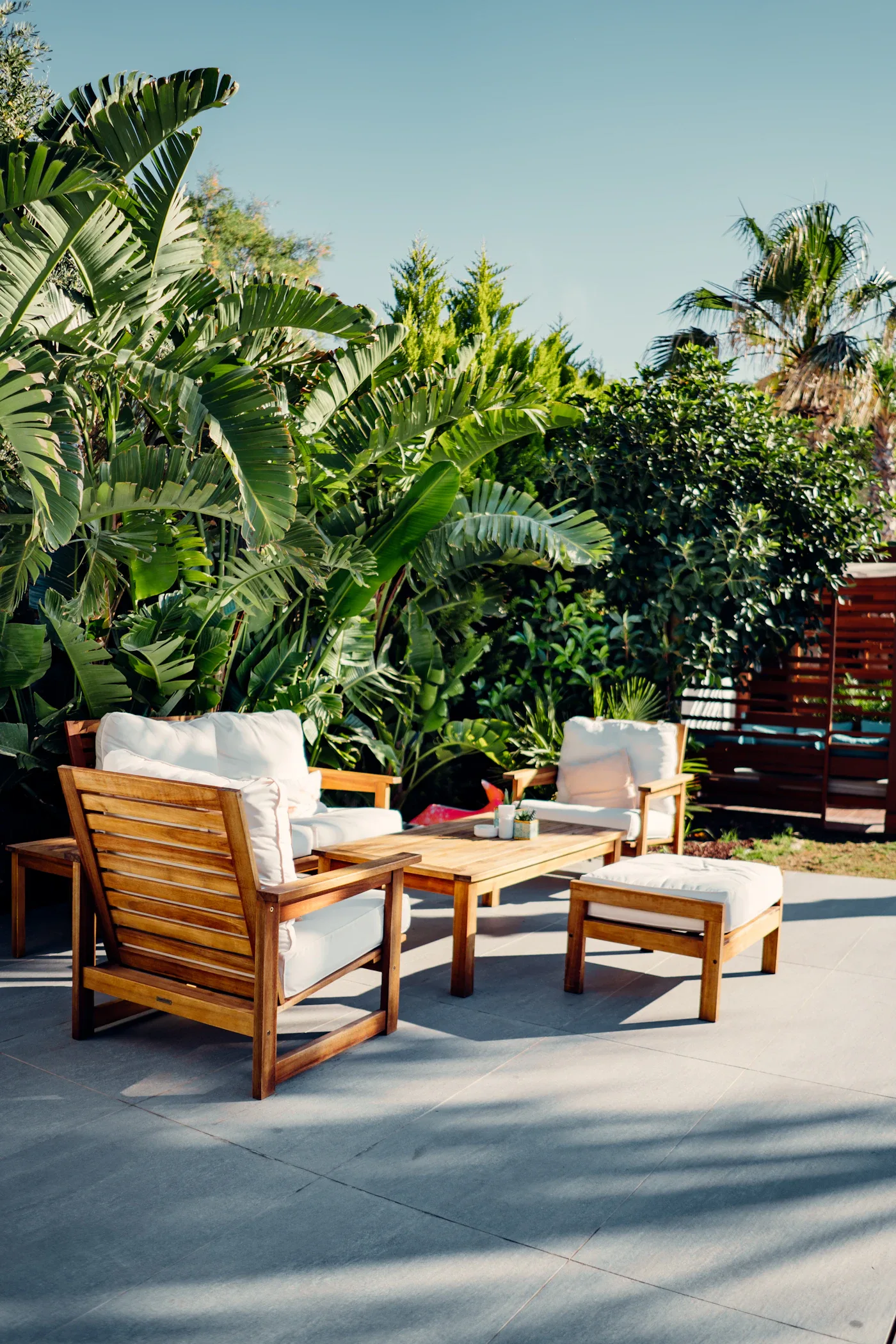
Wood furniture asks a straightforward question: do you like the way this specific product changes outdoors? Review the manufacturer's photographs and care guidance, including whether preserving the original color requires treatment. Do not assume that every brown outdoor chair needs the same oil or sealer.
Pay attention to edges and joints where cleaning cloths need to reach. On a dining table, decide whether a slatted top suits the small glasses and serving dishes you use. A more decorative pattern can also create more grooves to clean.
Metal: separate frame, finish, and hardware
The useful comparison is not simply “metal versus wood.” A slim aluminum chair and a heavy steel bench can behave very differently when you have to move them. Read the assembled weight rather than guessing from a photograph.
POLYWOOD's materials guide describes its aluminum, HDPE lumber, fabrics, and woven materials separately. That level of detail is helpful when evaluating any brand. Its statements describe its own construction and should not be treated as proof that every product using the same material performs identically.
Inspect the care section for coastal exposure, cleaning products, and damaged coatings. Confirm that replacement feet or glides are available if the furniture will stand on a surface you want to protect.
Wicker: ask what sits under the weave
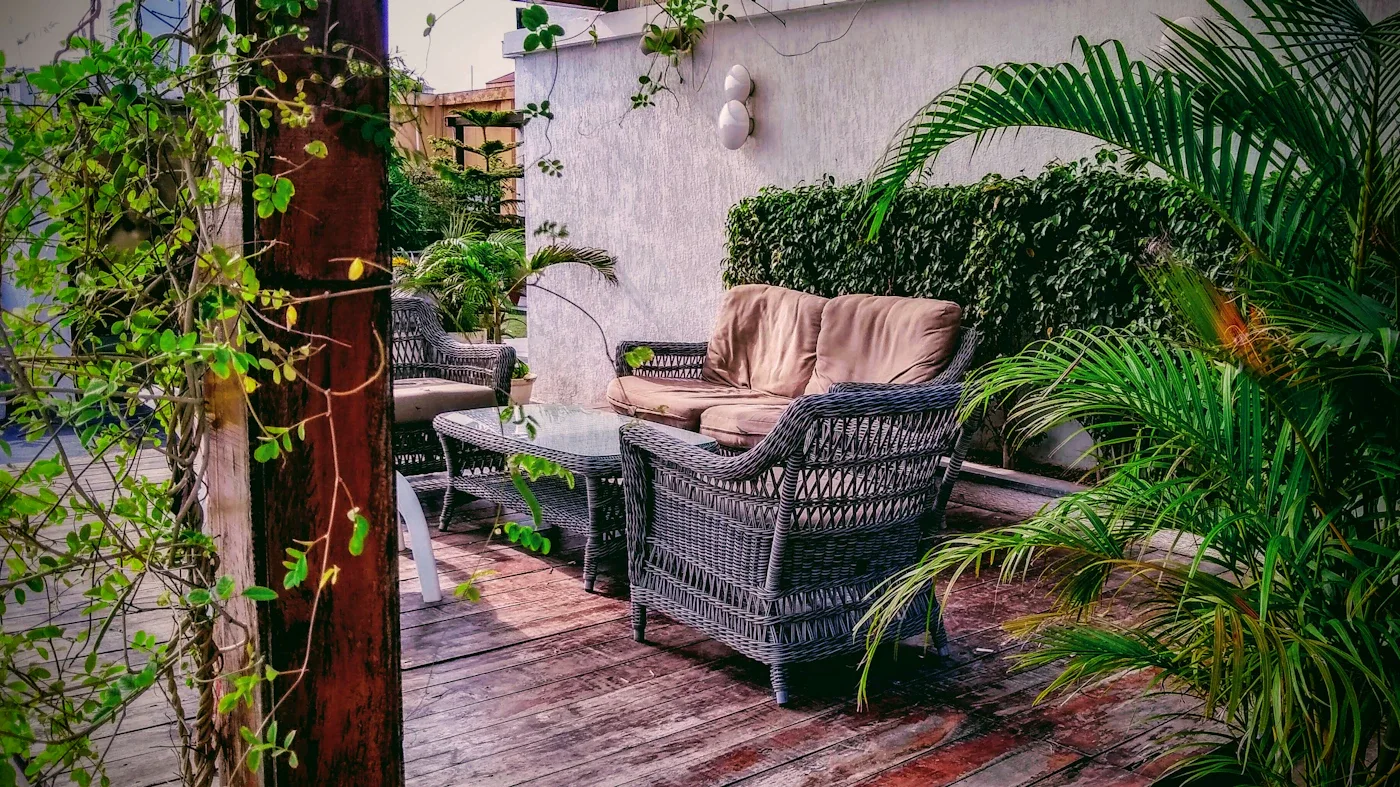
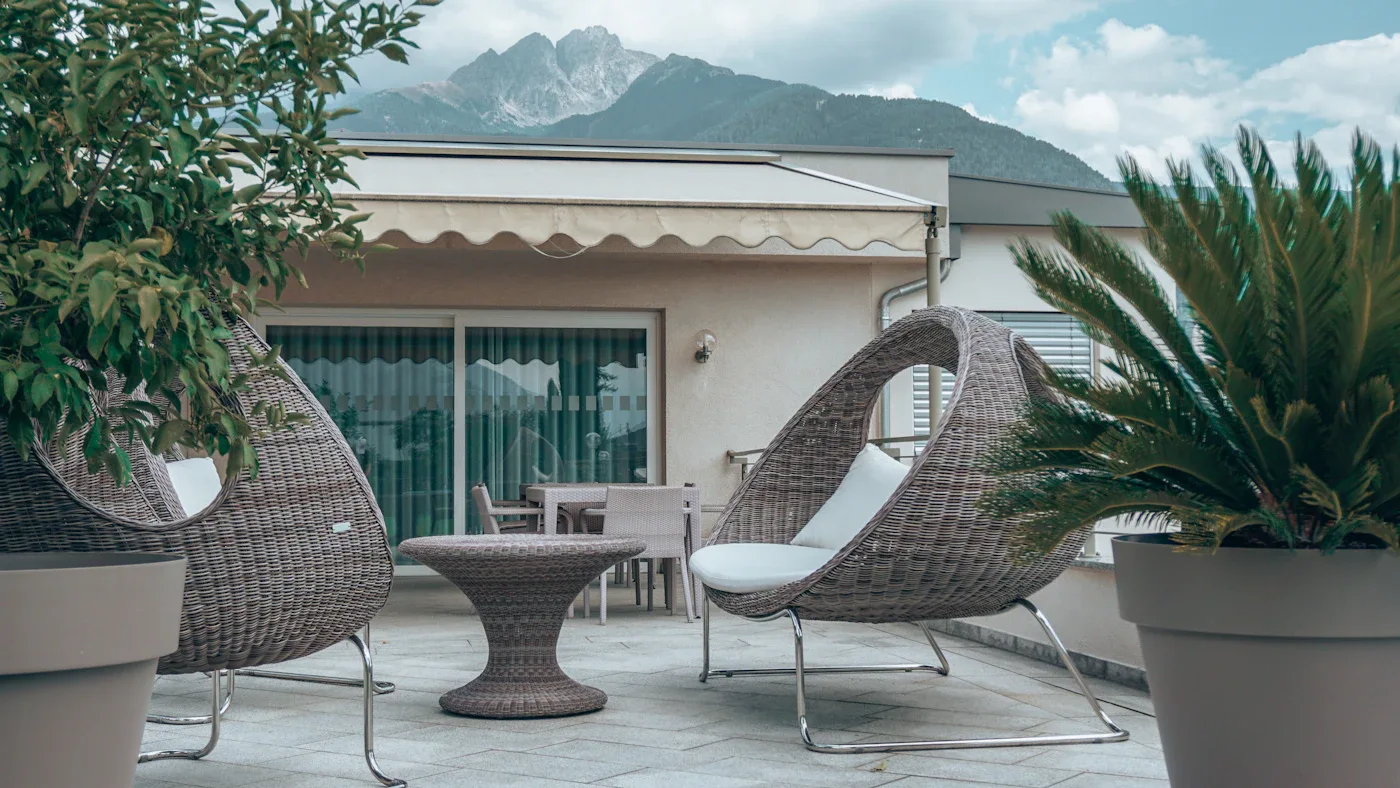
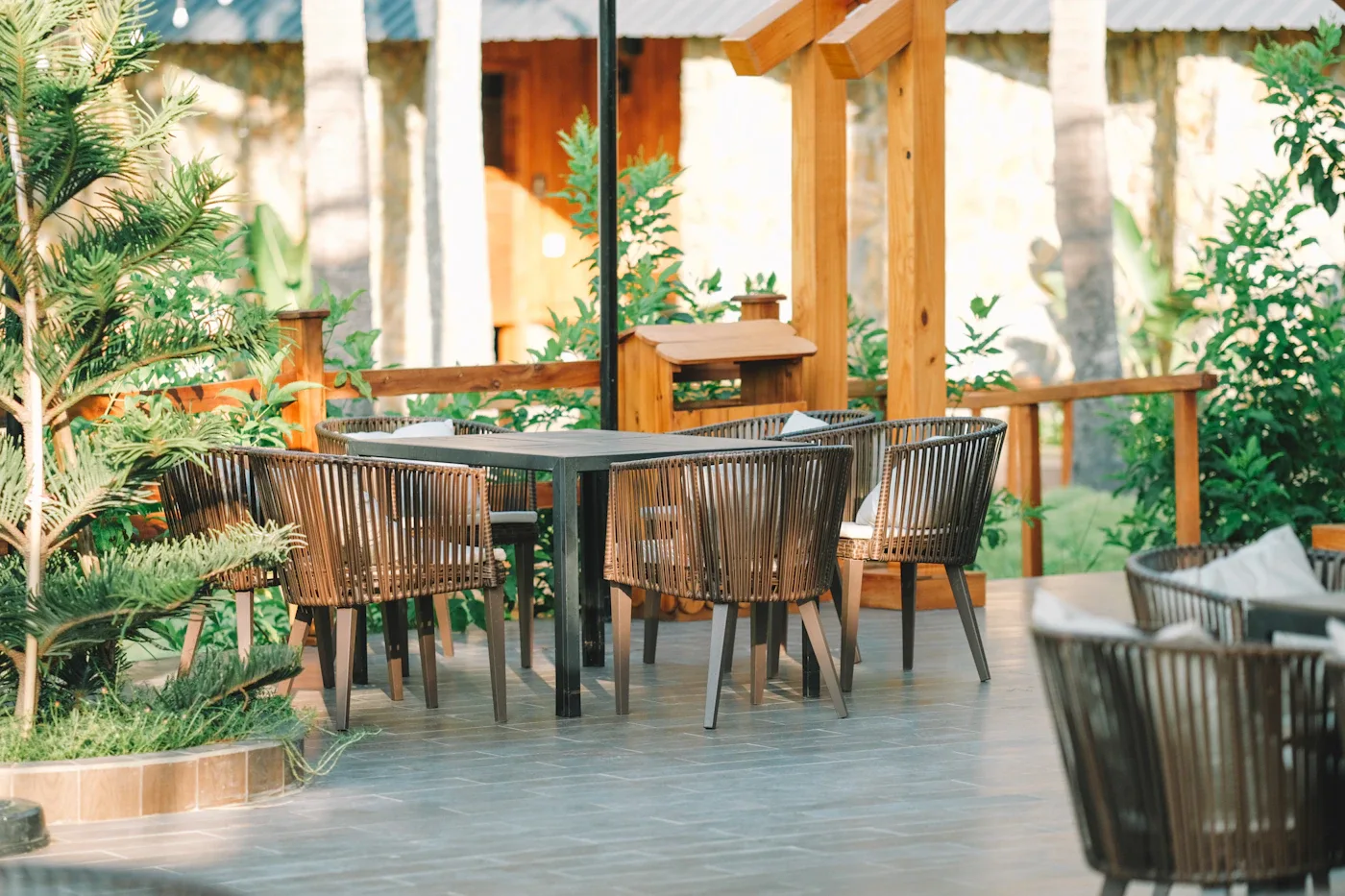
Wicker furniture can look airy while hiding a substantial frame. Ask whether the weave is natural or synthetic and whether the entire piece is intended for the exposure it will receive. A covered porch and an uncovered patio are different purchasing situations.
For a specific example, POLYWOOD's woven collection identifies both its weave and frame as HDPE-based. Other manufacturers may use very different combinations. You need that information before comparing prices meaningfully.
Where a higher price can be worthwhile
Spend on a comfortable seat geometry, clear care instructions, serviceable parts, and cushions you can replace. Those details can matter more to daily satisfaction than a marketing phrase about weather resistance.
Skip the assumption that a more expensive material makes storage unnecessary. Read the actual product instructions and plan for severe weather. Our cushion and storage guide helps account for the soft parts that are easy to overlook when pricing a set.
Common questions
Is “all-weather” enough information?
No. Look for the manufacturer's permitted use, care requirements, and warranty exclusions. The phrase does not tell you how the furniture should be handled in every climate or season.
Can I mix materials?
Yes. A wood table and metal chairs can work well together if their heights, arm clearance, and proportions fit. Use a repeated color or shape to connect them visually.
Is heavier furniture always a better choice?
No. Weight affects moving and storage, but it is not a standalone quality measure or a guarantee against movement in wind. Follow the manufacturer's weather guidance and choose a weight you can manage.
Sources and shopping references
- POLYWOOD: materials.
- POLYWOOD: woven outdoor furniture construction.
- IKEA: outdoor furniture formats and materials.
Sources checked October 9, 2026. Recommendations compare buying considerations; no comparative weather-exposure test was performed.
Check the details before you buy.
Compare current dimensions, materials, care instructions, and return terms at the retailer.