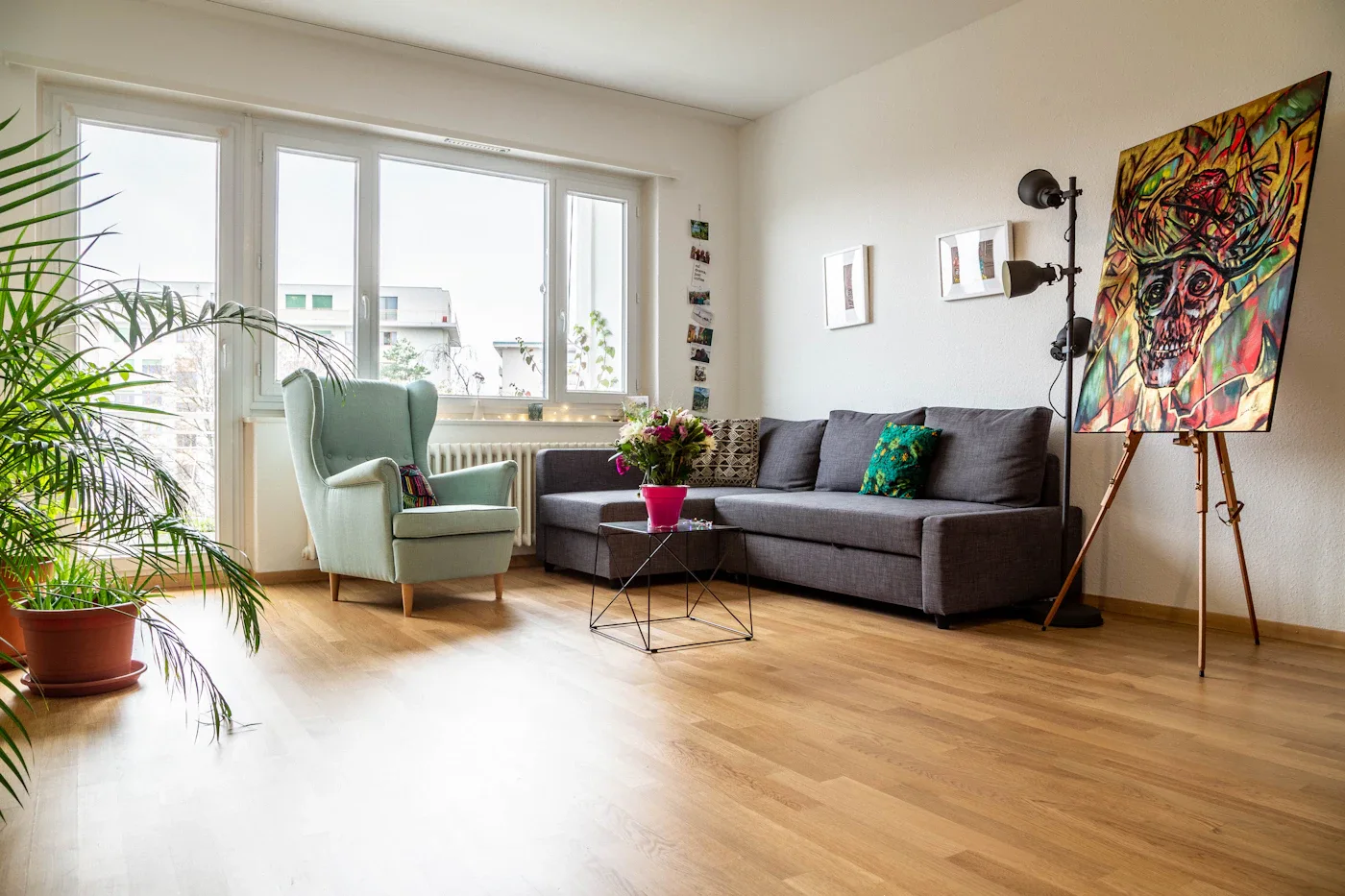
Throw Pillow Combinations That Make a Sofa Feel Finished
Shopping note: This guide links directly to retailers. We do not earn a commission from these links. Read our disclosure. This is a research-based buying guide.

The most successful pillow arrangement is one that still leaves room to sit. If every evening begins by moving cushions to the floor, the sofa is carrying more decoration than your household needs. A thoughtful combination can add color and texture without turning a comfortable seat into a display.
Our recommendation: start with the inserts and covers you already own, then add only the missing contrast. Usually the room needs a clearer relationship between color, pattern, and texture more than it needs additional pillows.
Borrow a color from something that will stay
Look at the rug, art, and curtains before shopping. Choose one existing color to repeat and a quieter tone that relates to the sofa. A faded blue in a rug might become a blue stripe; a warm cream in a painting might become a textured neutral cover.
There is no required number of colors. The aim is to create enough connection that the cushions look intentional. If every pillow introduces a new color and a new motif, the group can become visually louder than the room around it.
Photograph potential covers together, preferably with a sofa swatch. A small pattern and a large pattern may work better together than two similarly scaled prints competing for attention.
Choose a combination that serves the seat
| Sofa situation | Useful combination | Why it works | What to avoid |
|---|---|---|---|
| Plain neutral sofa and patterned rug | One quiet solid with a larger-scale stripe | Echoes the room without repeating every pattern | Several tiny prints that visually merge |
| Dark sofa in a bright room | A lighter textured cover with a related midtone | Creates contrast without a stark all-white arrangement | Picking white without checking its undertone |
| Shallow sofa | Modest square cushions or a narrow lumbar | Adds softness while preserving seat depth | Oversized, overfilled inserts |
| Deep lounge sofa | Larger supporting cushions with one accent shape | Makes the depth more adaptable | Decorative pillows too small to be useful |
| Busy household with pets | Simple removable covers with practical care instructions | Makes routine cleaning more manageable | Fragile embellishments chosen only for appearance |
Cover size and insert size need to agree
Measure the covers and inserts you own. Compare those dimensions with the seller's recommendations for the new cover. Some retailers suggest an insert slightly larger than the cover for a full appearance; that is not a universal rule, and excessive filling can strain a closure or create an uncomfortable cushion.
Check whether an item is a cover only or includes its insert. An attractive price can change once every cover needs a separate filling. Also consider how the pillow feels when leaned against, not only whether it holds a crisp decorative shape.
IKEA's cushion-cover collection is a useful place to compare square and other cover formats. Read the dimensions and care details on the individual listing before pairing it with an existing insert.
Texture should earn its maintenance
Velvety, woven, embroidered, and smooth covers create different effects. Use texture where it will be appreciated: a soft cover on a cushion you lean against, or a more decorative surface on an occasional chair.
Read care instructions for both the cover and the insert. A washable cover does not mean the filling can be washed in the same way. Check whether an insert needs special drying or professional care, and consider how often you are realistically willing to do it.
Zippers, buttons, and trims deserve attention. A concealed zipper can make cover changes straightforward, while elaborate fringe may catch or require more attention. This is particularly relevant when the cushions double as children's floor seating.
Try the arrangement before filling the cart
Lay the existing pillows on the sofa and remove any that do not help. Group the remaining ones where people actually lean. If both ends of the sofa need support, start there. If one end is normally used for lying down, leave that area comfortable rather than symmetrically decorated.
Buy the missing cover first and live with the result. A contrasting texture may be all the room needs. Keep a small group of alternative covers if you enjoy seasonal changes; they take less storage space than a second collection of full pillows.
What is worth paying for?
Spend on a pleasant feel, well-described materials, useful sizing, and a care routine that suits the household. Do not buy an entire coordinated set to get one pattern you love. A room often feels more personal when the covers connect without matching exactly.
For a broader palette plan, see our soft coastal decorating guide. The same approach works beyond coastal rooms: use a calm background and deliberate accents.
Common questions
Do pillows have to be arranged symmetrically?
No. Let the sofa's use determine placement. A balanced visual effect does not require identical cushions at both ends.
Can I mix squares and a lumbar pillow?
Yes. Compare their heights and how much seat space they occupy together. The different shape should add comfort or visual variety, rather than another object to move.
How many pillows should a sofa have?
Enough to be useful and no more than you enjoy handling. Seat depth, household habits, and the size of the cushions matter more than a fixed decorating formula.
Sources and shopping references
Sources checked October 9, 2026. Combination ideas are Home Gear Insight's editorial recommendations.
Check the details before you buy.
Compare current dimensions, materials, care instructions, and return terms at the retailer.