A Practical Guide to Layered Living Room Lighting
Shopping note: This guide links directly to retailers. We do not earn a commission from these links. Read our disclosure. This is a research-based buying guide.
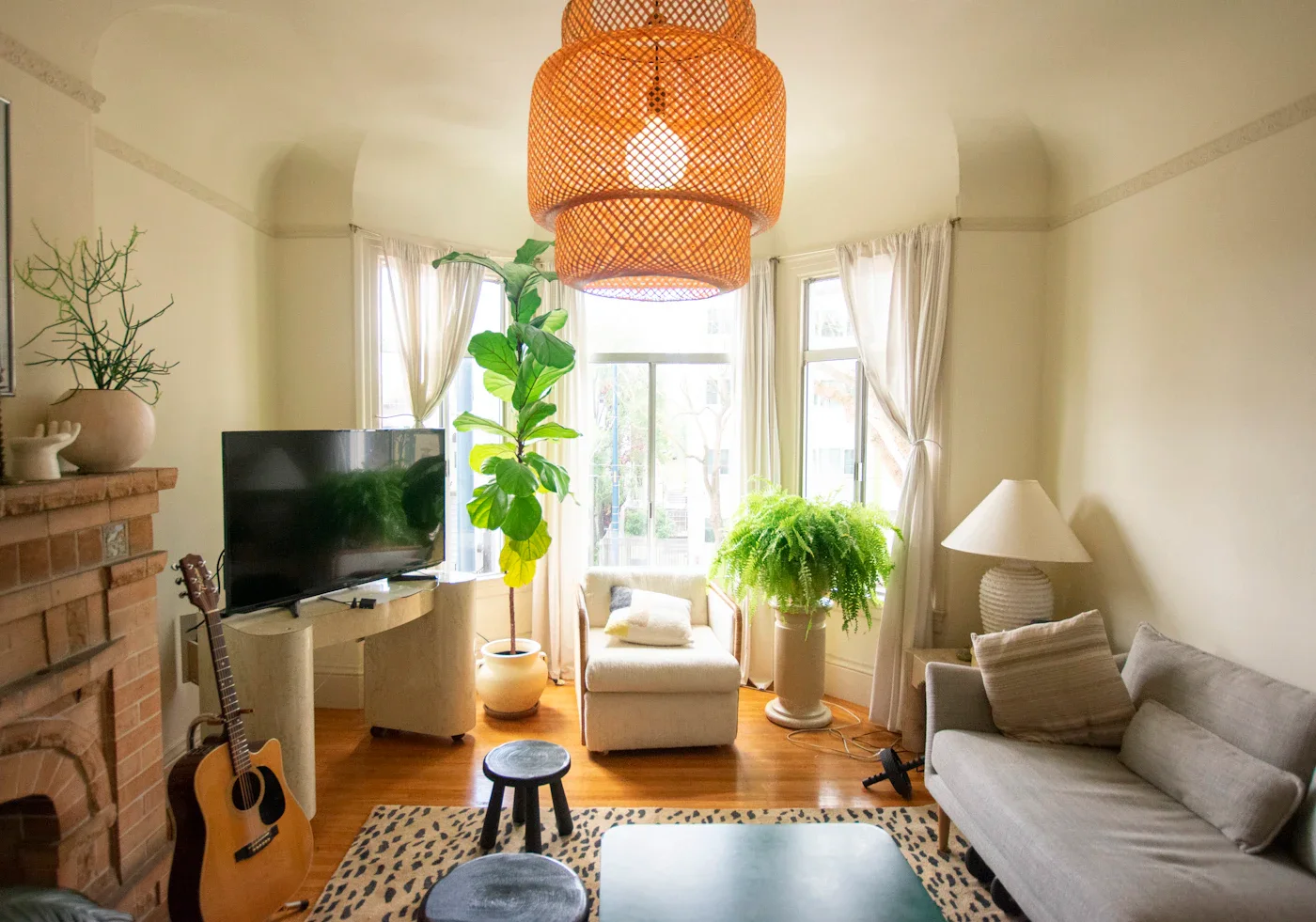
A ceiling light can make a living room bright enough to find a missing sock while leaving the reading chair uncomfortable and the sofa surprisingly gloomy. The solution is often a better distribution of light. Start with where people sit and what they do after sunset, then decide which lamps will help.
Our buying recommendation: add useful task lighting and a softer room light before investing in decorative fixtures. A reading lamp beside the chair and a shaded table lamp across the room often make a more practical first purchase than one larger overhead fixture.
Give each light a job
Think through an ordinary evening. Someone reads, someone watches television, and another person passes through on the way to the kitchen. Those activities need different kinds of light. A fixture that works well for one may create glare for another.
| Lighting layer | Everyday purpose | Suitable starting point | Main tradeoff |
|---|---|---|---|
| General light | Moving around and cleaning | Ceiling fixture or broad, diffused lamp | Can feel flat or glaring if used alone |
| Task light | Reading, crafts, or paperwork | Adjustable reading or desk lamp | Placement must suit the person using it |
| Ambient lamp | Relaxing and conversation | Shaded table lamp or diffused floor lamp | May not provide enough light for detailed tasks |
| Accent light | Highlighting art or a shelf | Directional fixture suited to the installation | Adds cost and visual emphasis rather than general utility |
This is a way to organize purchases, not a requirement to own a fixture in every category. A small living room may work well with fewer lights that serve more than one purpose.
Buy brightness and color deliberately
The Department of Energy's consumer lighting guide explains lumens as a measure of light output and Kelvin as the scale used for light color. Compare those specifications instead of treating bulb wattage as a direct measure of brightness.
For a relaxed room, start by sampling a warm-looking bulb and decide whether you like it with the wall paint and textiles. Keep the main lamps reasonably consistent in color unless you want a deliberate difference. Mixing very warm and very cool lamps can make a carefully chosen neutral palette look uneven.
One bulb in one lamp is a better initial experiment than buying a full household pack. The shade and fixture affect the result. A dense shade can reduce useful light, while an exposed bulb can be uncomfortable from a seated position.
Check the view from the sofa
Look at the lamp from where your eyes will actually be. Can you see the bare bulb below the shade? Does the light reflect in the television? Is the reading lamp behind your shoulder, where your body might cast a shadow across the page?
Before committing to a floor lamp, mark its base on the floor and check how it shares space with a side table. An arched lamp may put the light in a helpful position but need a large base. A compact upright lamp may be easier to place in a room with a narrow passage.
Browse IKEA's lighting collection to compare fixture formats, then read each item's bulb, dimmer, and installation requirements. Category photography does not confirm that a fixture fits your particular room.
Controls are part of the purchase
Place switches where they can be reached without moving a chair. If you want dimming, confirm compatibility among the bulb, fixture, and control. An LED bulb labeled dimmable does not establish that every existing dimmer will work with it.
Smart controls can be convenient for lamps scattered around the room, but they are optional. Check whether everyday operation still makes sense for guests and other household members. A simple reachable switch may be the better choice for one reading chair.
Keep cords out of walking routes and follow the product's electrical and installation instructions. A new hardwired fixture may need an electrician; plug-in lamps offer a simpler way to test a room's lighting arrangement.
Spend where you notice the difference
Prioritize adjustable direction, comfortable glare control, suitable brightness, and a stable base. Do not pay extra for decorative scale that crowds the table where you set a drink. Coordinate the lamp footprint with your coffee table and side-table plan.
Questions to settle
Do both sides of a sofa need matching lamps?
No. Match their usefulness and visual balance. Different lamps can work when their sizes and light colors feel compatible.
Can one floor lamp replace the ceiling light?
Sometimes, in a small room, but check all the places people need to see. A lamp that lights one corner beautifully may leave the entrance or cabinet dark.
Are smart bulbs necessary for layered lighting?
No. Layering describes where light comes from and what it does. Smart controls are only one way to operate those lights.
Sources and shopping references
Sources checked October 9, 2026. Placement and buying priorities reflect Home Gear Insight's editorial guidance.
Check the details before you buy.
Compare current dimensions, materials, care instructions, and return terms at the retailer.