A Small Kitchen Toolkit Worth Making Space For
Shopping note: This guide links directly to retailers. We do not earn a commission from these links. Read our disclosure. This is a research-based buying guide.
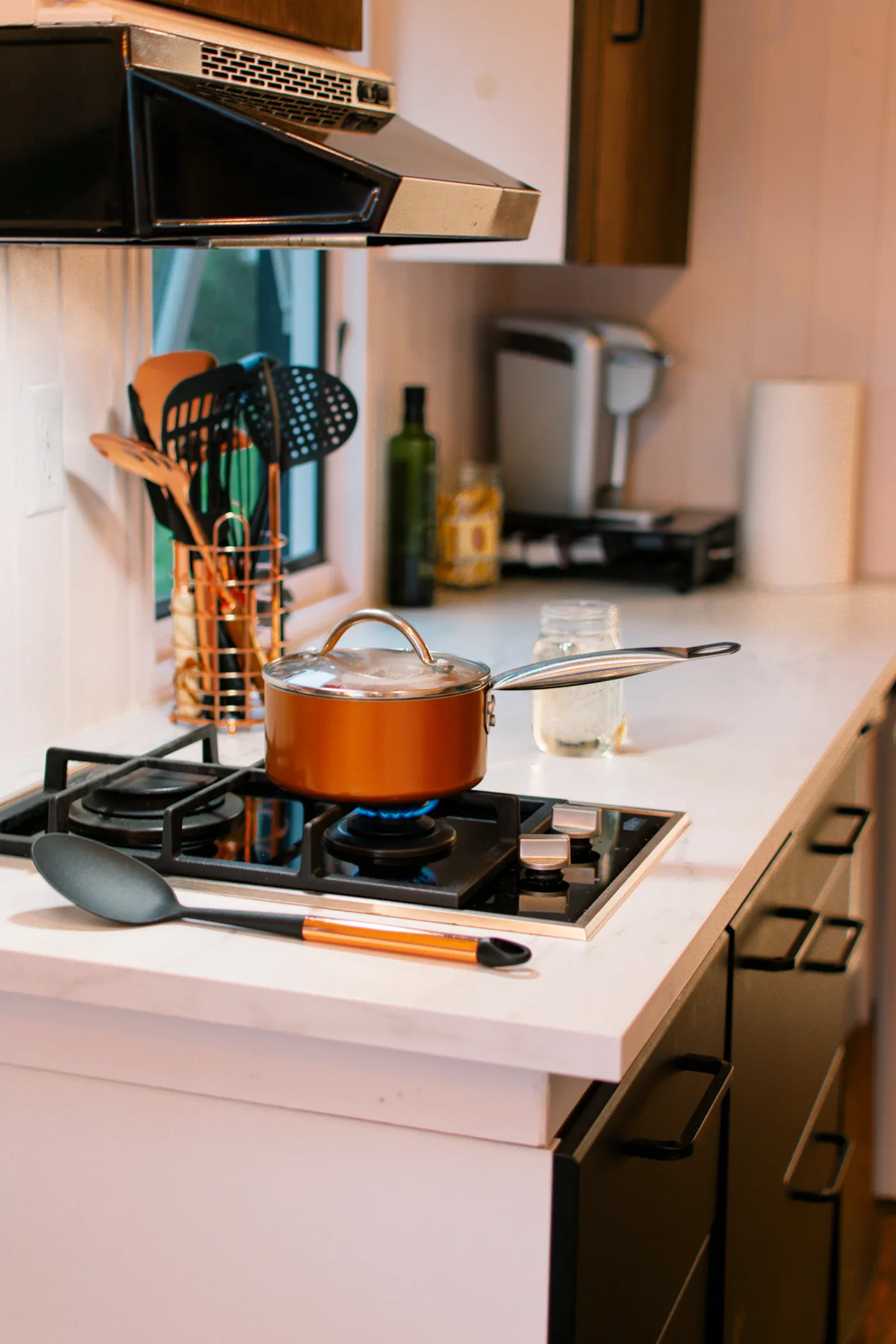
In a small kitchen, the difficult part is rarely finding another gadget. It is finding the tool you need without emptying the drawer. A useful toolkit starts with the meals you actually cook: perhaps eggs and toast, one-pan dinners, chopped salads, and a weekend baking project.
Our buying recommendation: buy a few versatile tools individually, add specialist pieces only for repeated tasks, and measure the drawer before choosing handles or storage. A compact kitchen benefits more from tools that clean and store easily than from a large matching set.
Build around actions, not product categories
Write down what a typical dinner requires: cutting, stirring, turning, draining, measuring, and serving. Keep the tools that perform those actions comfortably. If two items do the same job, decide whether you actually need both at the same time.
A broad starter set can include several shapes you rarely use. That does not make sets inherently poor value; it means their value depends on your cooking. Compare the useful pieces rather than the total piece count.
| Regular task | Useful starting tool | Why it earns space | When a specialist is justified |
|---|---|---|---|
| Stirring and scraping | Flexible spatula suited to your cookware | Reaches bowls and pan edges | A separate rigid spoon helps with heavier mixtures |
| Turning food | Turner matched to pan surface and food | Handles many stovetop meals | A wider turner helps if you often cook delicate larger portions |
| Gripping and serving | Manageable locking tongs | Can move vegetables and serve salads | Longer tongs may be useful for a different cooking setup |
| Peeling and trimming | Comfortable peeler plus a suitable knife | Covers frequent prep without bulky equipment | A specialty cutter makes sense for a repeated preparation |
| Draining | Colander or sieve that fits the sink | Supports pasta, rinsing, or straining as appropriate | A finer mesh helps if you regularly strain small particles |
| Measuring | Tools suited to your usual recipes | Makes repeat cooking more consistent | A scale is useful when recipes call for weight |
Match utensils to the pan
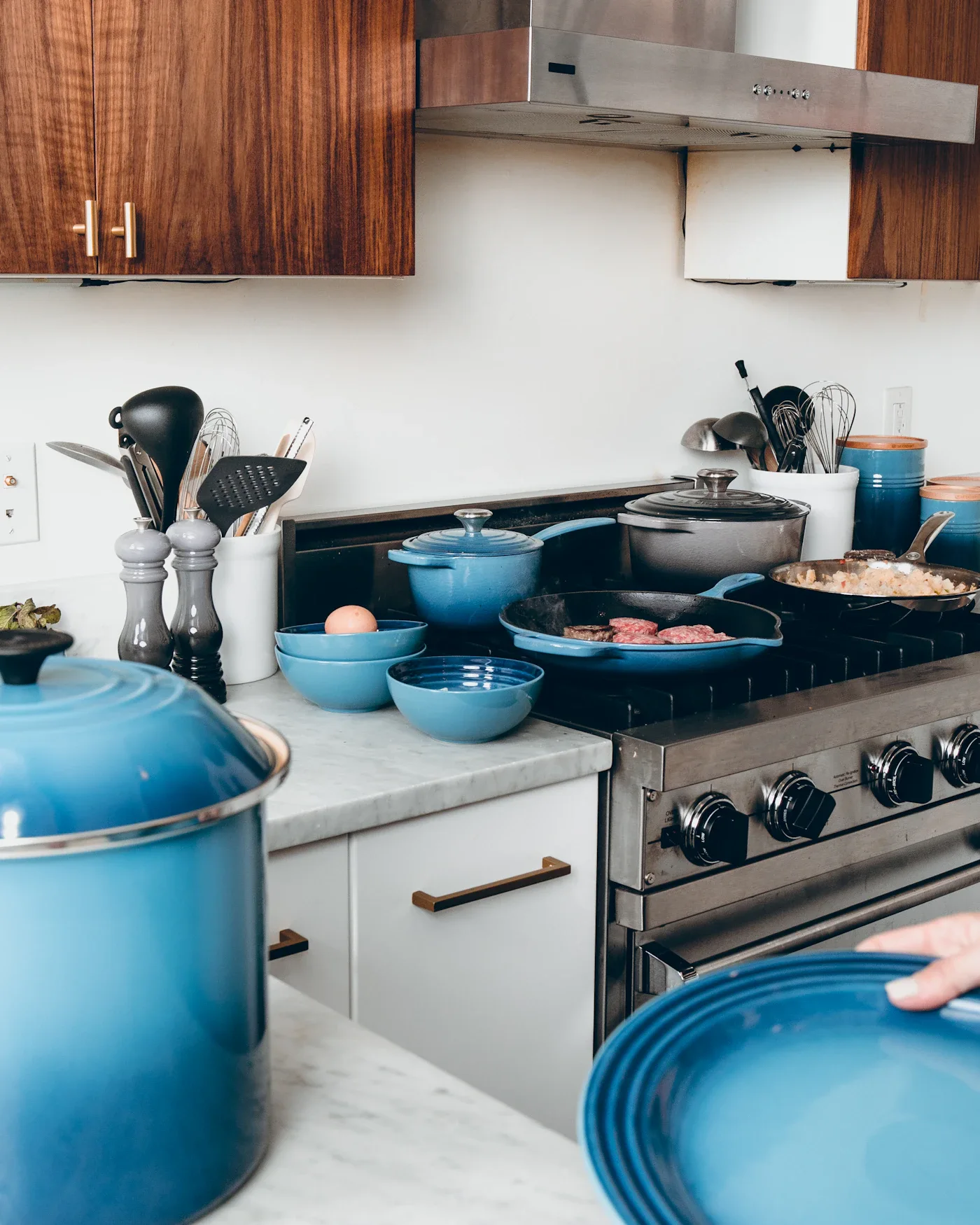
Check the cookware manufacturer's utensil guidance. Do not assume a metal tool is suitable for every coated pan. Silicone, nylon, wood, and metal tools also have different heat limits and care requirements, so read the specific listing rather than relying on the material alone.
OXO's spatula and turner collection includes flexible, rigid, silicone, nylon, wood, and metal formats. Compare the shape and intended task before choosing a color or buying several similar pieces.
A long handle can keep your hand farther from the pan but may be awkward in a small drawer. A large flexible head can scrape a mixing bowl effectively while being too broad for a narrow jar. These are fit decisions, not reasons to own every size.
Test the storage path
Measure the drawer's internal length, width, and height, including any organizer you want to keep. Open and close it with your current largest tools in place. An unusually tall handle or locking loop can catch even when the drawer looks spacious from above.
Keep the most-used utensils near the preparation area, but avoid crowding a counter crock until you have to pull out several items to reach one. Knives need storage that protects their edges and allows safe retrieval; they should not be loose among utensils.
If the kitchen has only one good prep surface, a cutting board that is large enough to use yet manageable at the sink deserves priority over extra gadgets. Measure where it will dry and live between meals.
Cleaning is part of convenience
Look for clear care instructions and accessible joints. A tool with a removable head may be straightforward to clean if the parts are designed for it; a tool with hidden crevices may require more attention. Check whether the entire utensil is dishwasher-safe or only certain parts.
Think about the cleanup after your actual meals. A food processor attachment that saves a minute of chopping but creates several awkward pieces to wash may be the wrong purchase for a single serving. For regular large batches, the balance could reverse.
Where to spend and what to postpone
Spend on comfortable grip, useful geometry, clear material information, and compatibility with the cookware you already own. Postpone specialty peelers, decorative measuring sets, and duplicate utensils until you can name the repeated task they improve.
Do not replace functional tools just to make the drawer match. Improve the layout first, then replace the pieces that are uncomfortable, damaged, or poorly suited to their jobs.
Common questions
Is a utensil set cheaper than individual pieces?
Sometimes, but compare the cost of the pieces you will actually use. Unneeded tools consume storage even when their marginal purchase cost is small.
Do I need both a colander and a sieve?
That depends on what you drain or strain. A fine sieve can handle smaller particles, while a larger colander may be easier for a full pot of pasta. Check capacity and handling.
Should everything be dishwasher-safe?
Only if that is how you plan to clean it. A hand-wash tool can be useful, but the maintenance needs to fit your normal routine rather than an idealized one.
Sources and shopping references
Sources checked October 9, 2026. Recommendations compare functions and published product categories, without claiming hands-on tests.
Check the details before you buy.
Compare current dimensions, materials, care instructions, and return terms at the retailer.