Wood vs. Plastic Cutting Boards: Build the Right Pair
Shopping note: This guide links directly to retailers. We do not earn a commission from these links. Read our disclosure. This is a research-based buying guide.
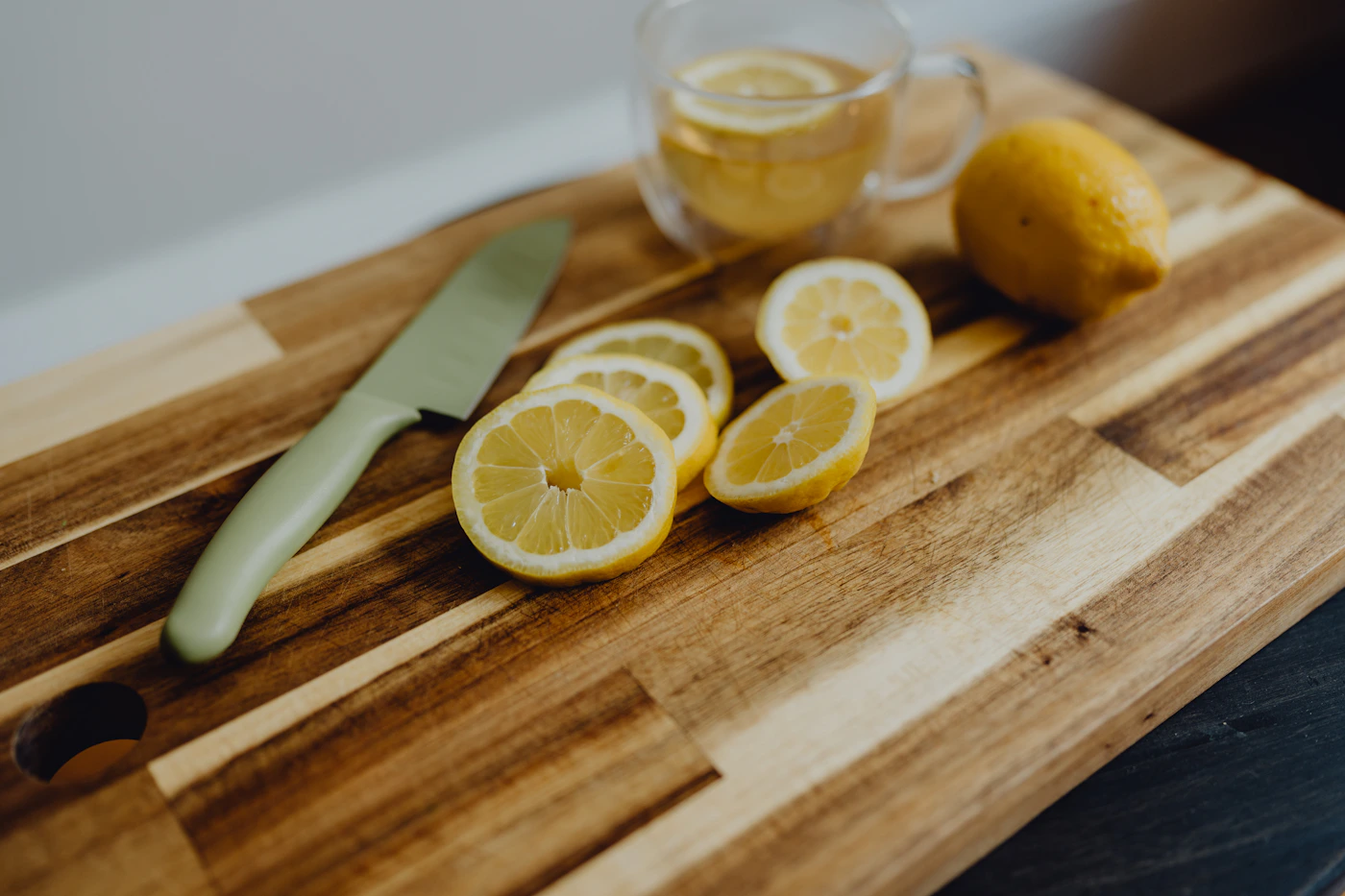
A cutting board should fit the meal and the cleanup that follows. A substantial wood board may be pleasant for chopping vegetables, while a lighter plastic board may be easier to carry to the sink after preparing raw meat. The useful question is how the boards work as a small system, rather than which material wins every task.
Our recommendation: keep separate, clearly distinguishable boards for ready-to-eat ingredients and raw meat, poultry, or seafood. Choose wood, plastic, or a combination according to how you handle and clean them. Two practical boards are more useful than one oversized board that is difficult to wash properly.
Separation matters more than a material slogan
The USDA's cutting-board guidance allows wood or nonporous surfaces and recommends considering separate boards for produce and bread versus raw meat, poultry, and seafood. Follow that separation consistently; the word “antibacterial” in marketing should not replace a cleaning routine.
Use an obvious distinction your household will remember, such as different colors or clearly different shapes. Store the boards so the intended one is easy to reach. A system that requires hunting through a crowded cabinet is less likely to stay convenient during dinner preparation.
Compare the ownership tasks
| Board type | Useful role | Practical advantage | Tradeoff |
|---|---|---|---|
| Wood board | Regular vegetable, bread, or general prep on its assigned surface | A substantial work surface, with many size options | Care and drying can require more attention |
| Plastic board | A separate raw-protein station or quick prep | Some models are dishwasher-safe and relatively easy to handle | Worn grooves can eventually become hard to clean |
| Thin flexible board | Occasional compact prep and transferring ingredients | Stores in little space | Stability and usable working area need checking |
| Large carving board | Roasts or larger foods prepared regularly | More room and, on some models, a juice channel | Can be awkward in a small sink or dishwasher |
These are buying considerations, not laboratory rankings of materials. Thickness, construction, surface condition, and the way you maintain a particular board matter.
Measure the sink before choosing the board
Mark the board's footprint on the counter and check how much room remains for ingredients. Then compare its dimensions with the sink and drying area. If you plan to use a dishwasher, verify both the product's permission for that method and its fit in the appliance.
A large board may be comfortable during chopping yet difficult to clean without splashing the surrounding counter. A very small board can force ingredients near its edge. Choose a size that provides useful working room without making washing an awkward balancing exercise.
If the board has feet or nonslip features, read how they affect use and care. Set it on a stable surface according to the instructions. A handle or juice groove can be useful, but either may reduce the flat area available for cutting.
Read the exact cleaning instructions
USDA advises washing boards after use and replacing excessively worn boards or those with grooves that are difficult to clean. Follow the manufacturer's instructions as well, particularly for wood construction, dishwasher use, and any conditioning products.
For example, OXO lists its three-piece everyday cutting-board set as dishwasher-safe. That is a published feature of those boards, not a claim about all plastic boards. We have not tested the set's durability or resistance to staining.
Allow cleaned boards to dry appropriately before storing them. Do not stack them damp in a tight cabinet. If a wood board requires periodic conditioning, use the product recommended by its maker and make that task part of the ownership decision before buying.
What is worth paying for?
Spend on an appropriate working area, manageable weight, clear care guidance, and construction that suits your routine. An elaborate end-grain pattern or display-worthy shape is optional. A board used mainly as serving decor should not consume the entire budget for functional prep surfaces.
Likewise, a multipack is useful only if the sizes have real jobs. Several tiny boards do not replace a comfortably sized everyday board. Match the purchase to the tools you use most and where you prepare food.
Common questions
Can wood be used for raw meat?
USDA permits wood or nonporous boards, but separation and proper cleaning remain essential. Choose a board and routine you can maintain consistently, and follow its care instructions.
When should a board be replaced?
Replace a board that is excessively worn or has grooves that are difficult to clean, as USDA advises. Also follow any product-specific guidance about cracks, damage, or deformation.
Do I need a juice groove?
It is useful if you regularly cut foods that release liquid, but it takes up working space and adds an area to clean. For vegetables or bread, a broad flat surface may be the more useful priority.
Sources and shopping references
Sources checked October 9, 2026. Food-safety guidance is attributed to USDA; purchasing judgments are editorial.
Check the details before you buy.
Compare current dimensions, materials, care instructions, and return terms at the retailer.